2024
Taptrack
Role
UX/UI Designer
Platform
Mobile App
About
Partnering with Wolves University
to design a mobile app for people
living with Parkinson's, the app would allow them
to track and mange their symptoms.
Case Study
The Problem
My Approach - understanding the users
Before anything, myself and stakeholders were able to have a normal conversation with a few individuels living with Parkinson's, not about design or anything, this helped us build empathy,
and understand who they are and how they live on a human level.
Understanding Accessibility
Before moving into any time of design ideas, I first understood the accessibility requirements for
people living with Parkinson's, from speaking to a few users, I understood, the app has to:
Buttons had to have big enough tap areas
Take into accountant the symptoms of Parkinson's & how we can design around that
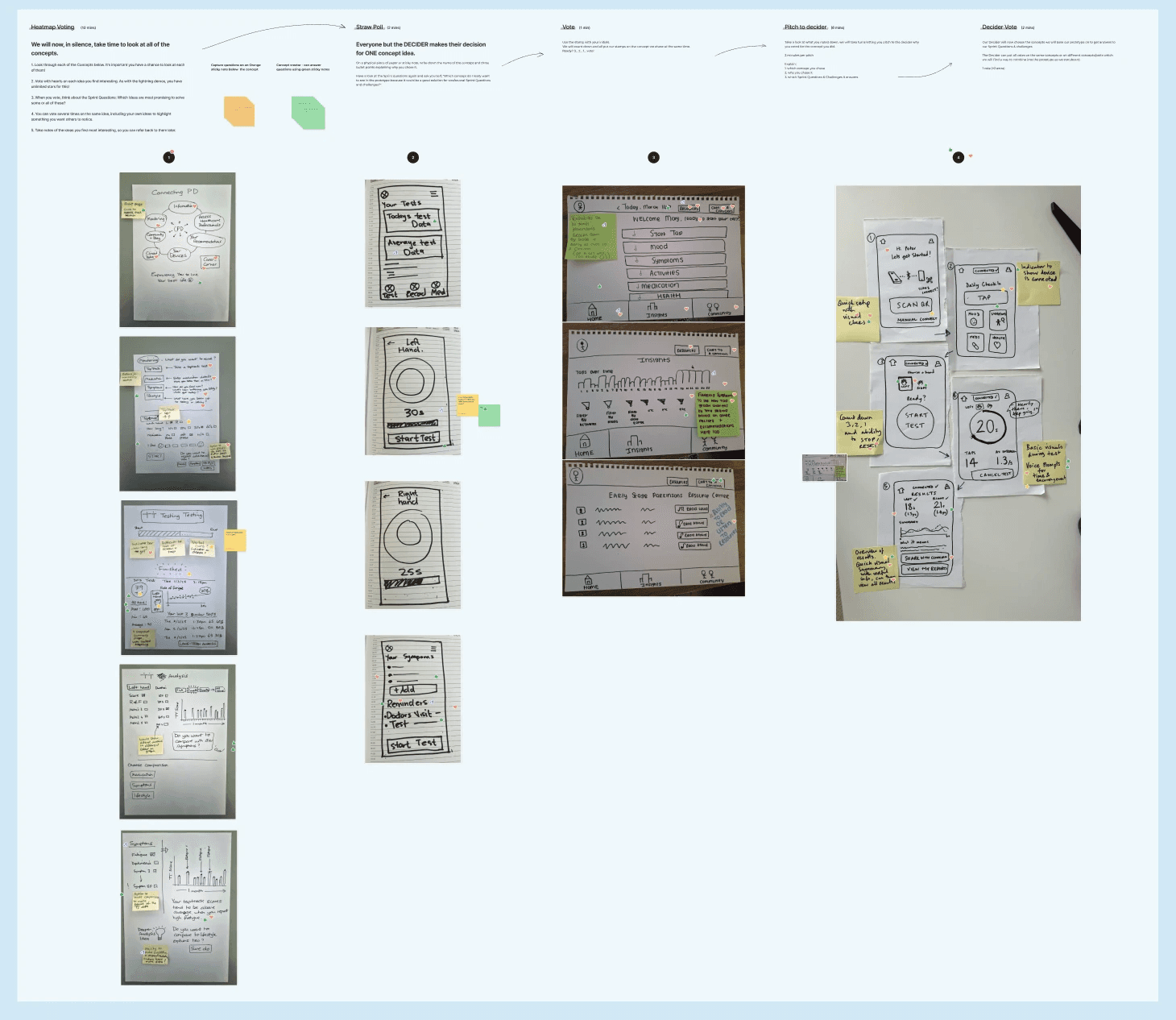
Solution Design Sprint
To kickstart the project, we aligned to understand the business needs, user needs & accessibility needs, a learning curve was relearning what I know about Parkinson's disease and how it effects people living with it.
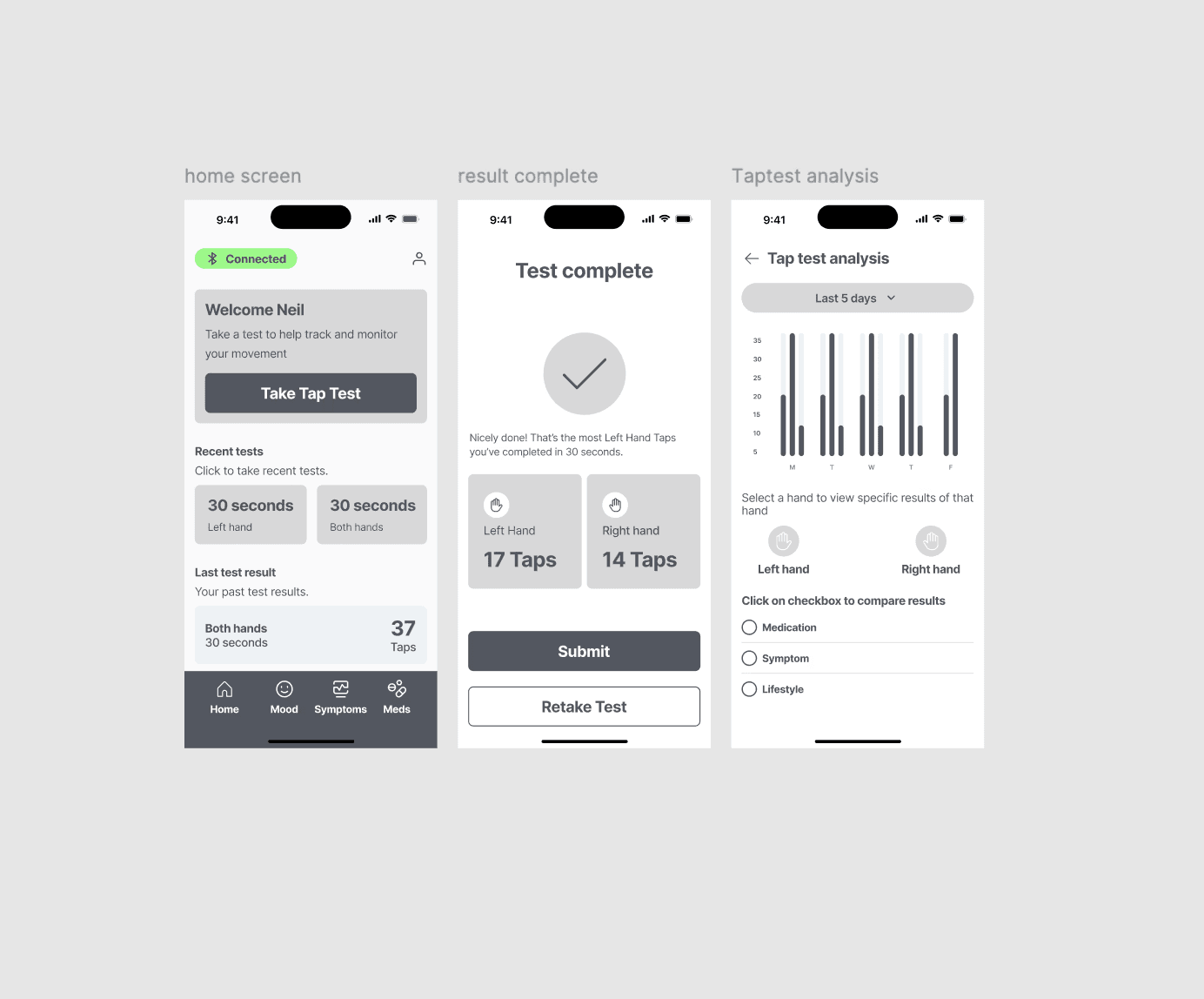
Wirefame
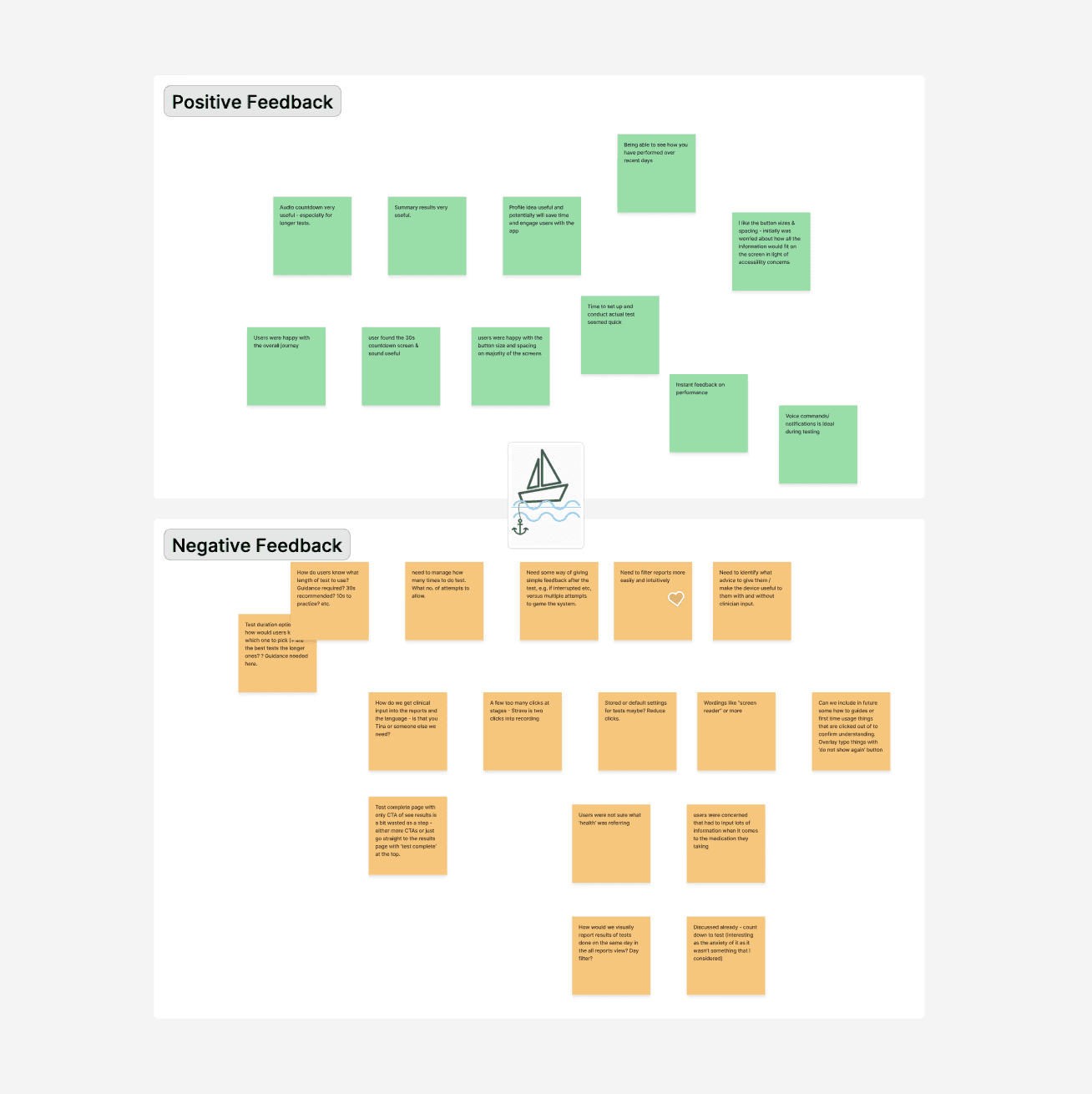
User Testing
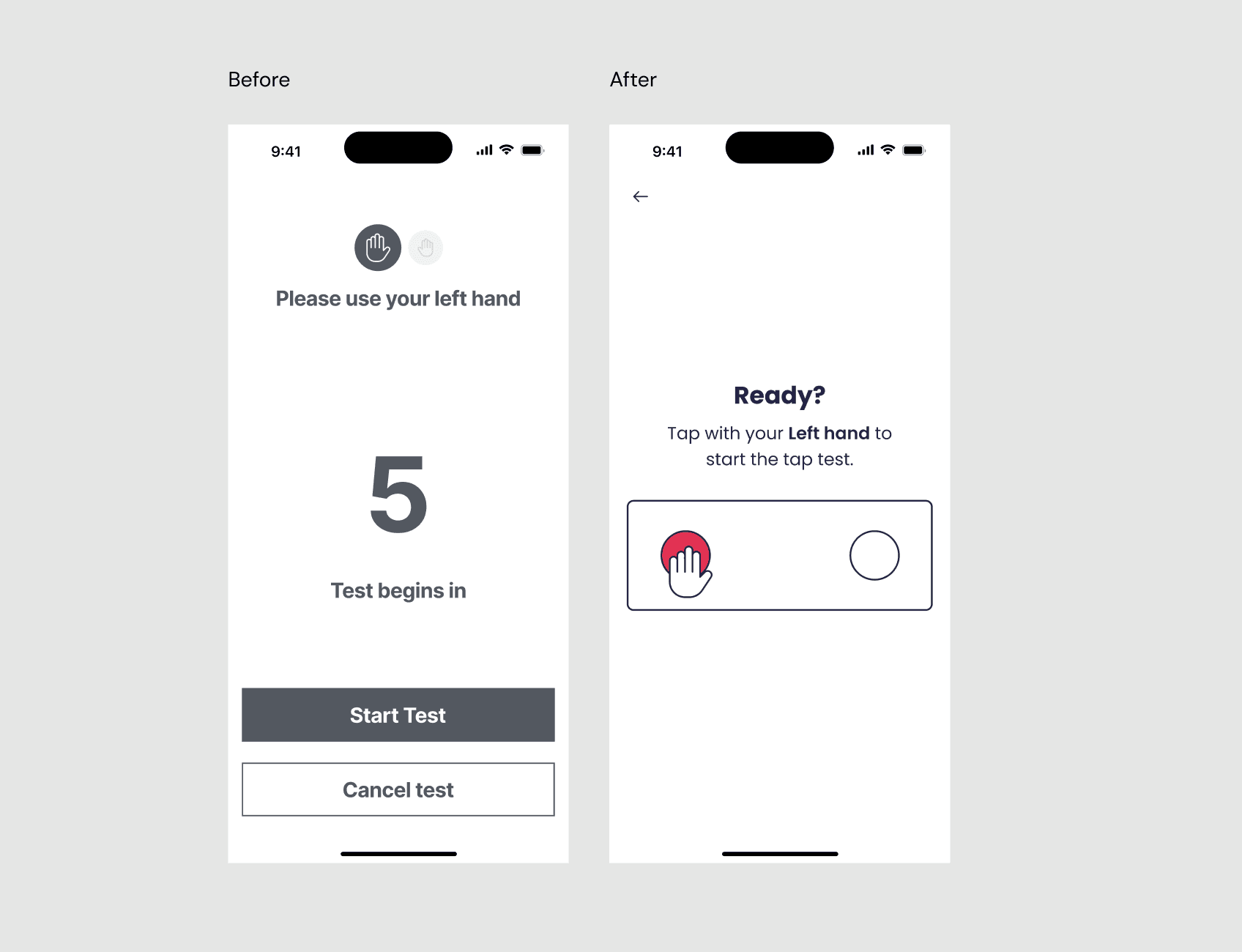
Design iteration
We gathered the feedback, found some common theses and updated the designs based off the
the data we gathered.
One of the key changes was to allow users to start the test when they are ready, instead of adding a timer that applies pressure.
Prototype
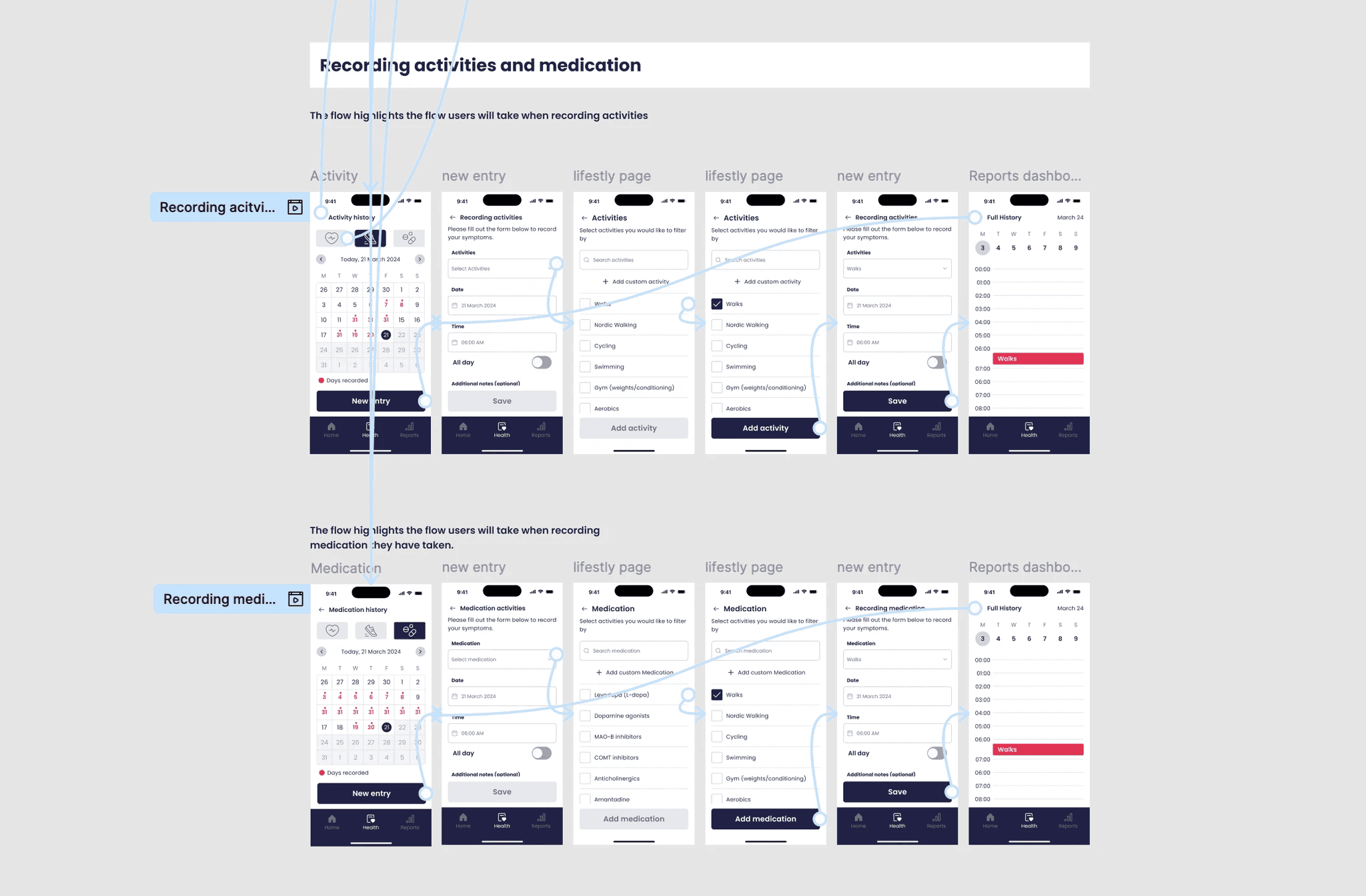
After designing the rest of the screens, I then prototyped the remaining screens for the next rounds of user testing.
Final outcome
Results & Reflection
Results
People living with Parkinson's felt like they could use this app in their daily lives
Accessibility was heavily considered at every point
What I learned
This project really shaped my career and how I think about accessibility, I deeply realised the importance of user testing, this project would not have been a success without understanding
and connecting with users on a human level first